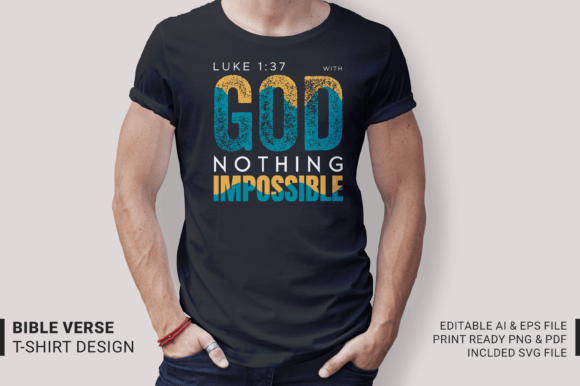
Reviewing Nothing is Impossible with God for Embroidery
As a designer who spends more time staring at stitch simulations than actual fabric, I have learned to be skeptical of digital assets that promise versatility without proof. When I first pulled up the Nothing is Impossible with God design file, my initial reaction was cautious optimism. The phrase carries significant weight, both spiritually and visually, and translating such a bold statement into thread requires a delicate balance between legibility and artistic flair. This is not just another generic quote; it is a statement piece that demands respect in its execution.
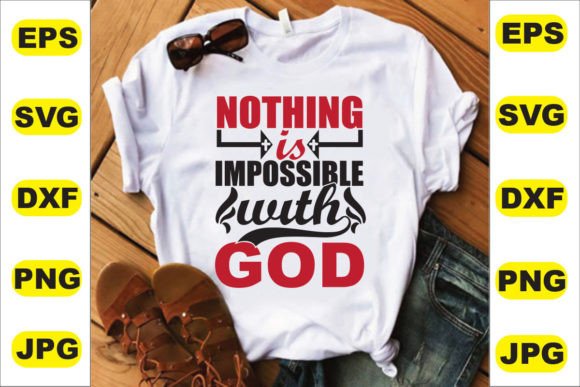
The file package includes EPS, DXF, PNG, SVG, and JPEG formats, which immediately signals that this asset is built for cross-platform utility. However, my focus here is strictly on its viability as a machine embroidery design. The description notes that the main file is made with 100 vector shapes and is resizable. For an embroidery professional, "resizable" is a double-edged sword. While vector scalability is excellent for printing or cutting, embroidery requires specific attention to stitch density and underlay when scaling. I approached this review by imagining how this design would hold up on a real-world project, specifically a custom tote bag for a local church fundraiser.
First Impressions and Visual Personality
The mood of Nothing is Impossible with God is uplifting yet grounded. It does not rely on overly ornate flourishes that often clutter small hoop spaces. Instead, the layout feels open and breathable. In the context of T-Shirt Designs and general Graphics, this openness is crucial. When converted to stitches, open layouts prevent the "cardboard effect" where dense stitching makes fabric stiff and uncomfortable. The visual personality suggests a modern, clean aesthetic that appeals to a broad demographic, from young parents looking for nursery decor to adults seeking inspirational apparel.
I noticed that the lettering structure appears robust. Thin, wispy fonts are the enemy of embroidery, often resulting in broken threads or poor registration on textured fabrics. This design seems to avoid that pitfall, offering strokes that can comfortably accommodate a satin stitch or a tight fill stitch without losing definition. This is a critical detail for anyone running a craft business or selling on Etsy, where product quality directly influences customer trust and repeat business.
Real-World Application: The Tote Bag Test
To truly evaluate this design, I mentally walked through the process of creating a personalized gift using it. I chose a heavy canvas tote bag as the test subject. Canvas has a distinct weave, and if the stitch density is too low, the background fabric shows through the letters, ruining the contrast. If the density is too high, the bag becomes rigid.
Given that the design is composed of vector shapes, I would recommend digitizing or adjusting the stitch types carefully if you are converting it yourself, or verifying the existing digitization if it comes pre-digitized. For a tote bag, a combination of satin stitch for the borders and a light fill stitch for the interior of larger letters would work beautifully. The result is a handmade product that feels premium rather than mass-produced. The clarity of the message ensures that even from a distance, the inspirational intent is clear, enhancing the giftability of the item.
Versatility Across Apparel and Home Decor
Beyond tote bags, this design shines in custom apparel. Imagine this embroidered on the left chest of a sweatshirt or across the back of a hoodie. The scalability mentioned in the file description allows for these variations, but caution is advised. When shrinking the design for a baby embroidery project, such as a onesie or a burp cloth, you must ensure the text remains legible. Tiny lettering can easily become a blob of thread if the stitch count is not optimized for smaller hoop sizes.
For home decor, consider a pillow cover or a kitchen towel. On a tea towel, the design could serve as a festive holiday embroidery piece, perfect for Easter or Christmas gifts. The clean lines of the graphics allow it to pair well with simple decorative accents, such as a small cross or a floral element, without competing for attention. This flexibility makes it a valuable asset for small shop owners who need to maximize the utility of their design library.
Technical Considerations and Potential Pitfalls
While the design is strong, there are areas where careful planning is essential. First, consider the fabric texture. On stretchy fabrics like jersey knits, proper stabilizer use is non-negotiable. Without a cut-away stabilizer, the tension from the embroidery hoops can distort the fabric, causing the letters to pucker or warp. This is especially true for longer phrases like "Nothing is Impossible with God," where consistent alignment is key to professionalism.
Dark fabrics present another challenge. If you are stitching white or light-colored thread on a black sweatshirt, you may need to adjust your thread colors or add an underlay to ensure the text pops. I always recommend testing the design on scrap fabric first. Check the thread color contrast in natural light and artificial light. A design that looks crisp on a screen might lose definition if the thread sheen clashes with the fabric matte finish.
Additionally, be mindful of curved surfaces. Embroidering this on a cap requires a different approach than flat apparel. The curvature of the cap brim or crown can distort long horizontal lines. You may need to break the design into smaller sections or adjust the pull compensation to account for the fabric's tension on the curve. Always confirm hoop size compatibility before starting. If the design is wider than your standard hoop, you will need to plan for multi-hooping, which requires precise alignment to avoid visible seams in the stitching.
Commercial Viability and Brand Consistency
For Etsy sellers and creative entrepreneurs, the commercial potential of this design is high. Inspirational quotes are evergreen sellers. However, brand consistency is vital. If your shop specializes in minimalist aesthetics, this design fits perfectly. If your brand is more rustic or vintage, you might need to adjust the font style or add distressed elements during the digitizing phase.
Before listing finished products or digital embroidery files, always confirm licensing terms. The product description mentions it is ready for printed t-shirts and apparel, but intellectual property rights for religious phrases can sometimes be nuanced. Ensure you have the right to sell items featuring this specific typographic arrangement. Using printable mockups to showcase the design on various products can help gauge buyer engagement before committing to large production runs.
Final Verdict for Designers
In conclusion, Nothing is Impossible with God is a solid addition to any embroidery designer’s toolkit. Its strength lies in its clarity and emotional resonance. It performs well on stable fabrics like canvas and cotton blends, making it ideal for tote bags, aprons, and structured apparel. While it requires careful handling on stretchy or dark materials, the effort yields a high-quality finished product that customers appreciate.
My advice is to treat this not just as a graphic, but as a tactile experience. Test your stabilizers, refine your thread choices, and respect the scale of the design. When executed with precision, this embroidery project elevates simple garments into meaningful keepsakes. For small business owners looking to expand their catalog with meaningful, high-demand items, this design offers a reliable foundation for creativity and commerce.